Most North Texas winters are mild, until they aren’t. When the first real cold front rolls through Parker County, the same questions come up every year: why is my heat pump blowing cold air, why won’t it shut off, and is that ice on the outdoor unit a problem? Here’s what’s normal, what isn’t, and what to check before you call.
Why does my heat pump blow cooler air than a furnace?
A heat pump doesn’t make heat by burning fuel. It moves heat from the outdoor air into your home, so the air from your vents is warm rather than hot. It can feel lukewarm on your hand even while it’s heating your home just fine. A gas furnace, by contrast, produces noticeably hotter air in shorter bursts.
That’s also why heat pumps are so efficient. According to the U.S. Department of Energy, a properly installed air-source heat pump can deliver two to four times more heat energy to a home than the electrical energy it uses.
Is it normal for my heat pump to blow cold air for a few minutes?
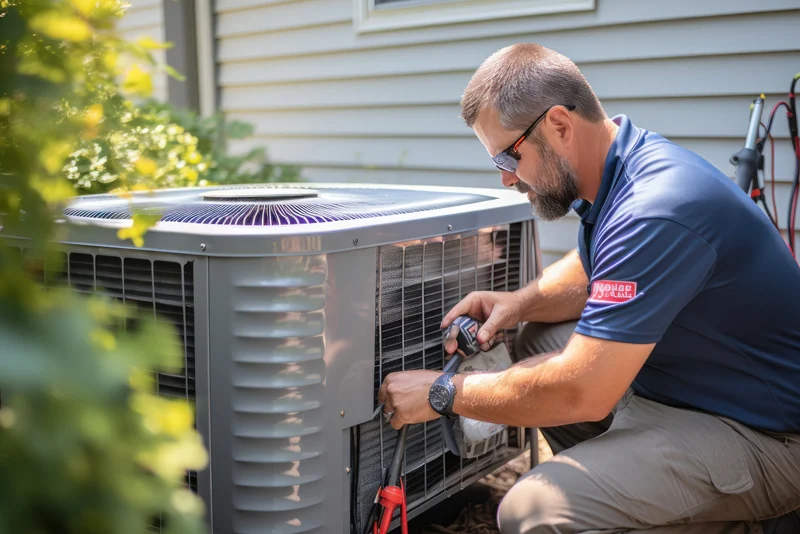
Yes, if it only lasts a few minutes. In cold, damp weather, frost builds up on the outdoor coil. To clear it, the heat pump switches into defrost mode for a short time. The outdoor fan stops, you may hear a whoosh, and you may see steam rising from the outdoor unit. That’s normal.
During defrost, the air from your vents can feel cool until the backup heat catches up. Once the coil is clear, the system goes back to normal heating. If you’re getting cold air for more than about 15 minutes at a time, or every time the system runs, something else is going on.
What do aux heat and emergency heat mean on my thermostat?
- Aux heat (auxiliary heat) is backup heat, usually electric heat strips, that turns on automatically when the heat pump needs help. That happens during defrost, on very cold days, or when you raise the thermostat several degrees at once. Seeing it now and then is normal.
- Emergency heat is a setting you turn on yourself. It shuts off the heat pump and runs only the backup heat. Use it only if the outdoor unit is broken, damaged, or iced over, and then call for service. It costs much more to run.
Standard heat pumps lose heating capacity once outdoor temperatures drop below about 40°F, according to research from the Pacific Northwest National Laboratory, which is why backup heat matters on the coldest days. To keep aux heat from running more than it needs to, raise your thermostat a degree or two at a time instead of making big jumps.
Why does my heat pump run constantly in cold weather?
When temperatures are in the 20s and 30s, a heat pump often runs long, steady cycles to keep up. That’s normal and usually more efficient than frequent on-and-off cycling. It becomes a concern when the system runs nonstop on a mild day in the 40s or 50s, or runs constantly while your home keeps getting colder. That can point to a dirty filter, low refrigerant, or a failing part.
Is ice on my outdoor unit a problem?
A light layer of frost is normal, and the defrost cycle should clear it. Thick ice that covers the whole coil, the top of the unit, or the fan and doesn’t clear within an hour or two is not normal.
- Don’t chip at the ice with tools. You can easily puncture the coil.
- Check whether a gutter or roof edge is dripping water onto the unit. That’s a common cause after freezing rain.
- If the ice won’t clear, switch your thermostat to emergency heat and call for service.
How to get your heating ready for a North Texas freeze
North Texas homeowners still remember February 2021, when a historic winter storm brought days of sub-freezing temperatures and widespread power outages. You can’t control the weather, but you can make sure your system is ready before the next hard freeze. Here are the basics, and our winter HVAC checklist walks through each step in more detail:
- Change your air filter before cold weather arrives. ENERGY STAR recommends checking it every month and changing it at least every three months.
- Clear the outdoor unit of leaves, grass, and debris, and keep a couple of feet of open space around it.
- Test your heat on a mild fall day so any problems show up before the first freeze, not during it.
- Replace your thermostat batteries if it uses them.
- Test your carbon monoxide alarms if your home has any gas appliances.
- Schedule a fall heating tune-up. ENERGY STAR recommends a heating checkup in the fall, before contractors get busy. See our year-round HVAC maintenance schedule for the full checklist.
Gas furnace safety: carbon monoxide
If your home has a gas furnace, water heater, or fireplace, carbon monoxide safety matters every winter. The U.S. Consumer Product Safety Commission recommends a CO alarm on every level of your home and outside sleeping areas, with battery backup in case of a power outage, and a professional inspection of fuel-burning heating equipment every year.
If your CO alarm sounds, don’t try to find the source. Get everyone outside to fresh air and call 911. If you smell gas, leave your home and call 911 or your gas utility from outside.
When to call for heating service
- Cold air from the vents for more than about 15 minutes at a time
- An outdoor unit that stays covered in thick ice
- Aux or emergency heat that stays on all the time
- A burning smell that doesn’t fade. A brief dusty smell the first time you turn on the heat each season is normal.
- Grinding, banging, or rattling noises
- A gas furnace flame that looks yellow instead of blue, or a furnace that keeps shutting on and off
- A breaker that trips whenever the heat runs
We’re on call 24/7, and Total Comfort members pay no after-hours fees. Call 817-863-1841 or schedule a visit online, and we’ll find out what’s going on. If your heating system is getting older, our guide on whether to repair or replace your system can help you weigh your options.
Frequently asked questions
Should I use emergency heat when it’s really cold outside?
No. Your heat pump brings on backup heat automatically when it needs it. Use emergency heat only if the outdoor unit has stopped working or is iced over, and call for service.
Why is my heat pump steaming and making a whooshing sound?
That’s the defrost cycle. The system is melting frost off the outdoor coil, and the steam is that frost turning to vapor. It usually lasts just a few minutes.
Is a heat pump or a gas furnace better for North Texas?
Both work well here. Because North Texas winters are mostly mild, a heat pump handles most of the season efficiently, while a gas furnace or a dual-fuel setup (a heat pump with gas backup) delivers hotter air during hard freezes. The right choice depends on your home, your ductwork, and whether you have gas service.
How often should I change my air filter in winter?
Check it every month and change it whenever it looks dirty, or at least every three months. Winter is a heavy-use season, so filters fill up faster.
Do you offer emergency heating repair on nights and weekends?
Yes. Maverick is on call 24/7 across Parker, Tarrant, and Wise counties, including Azle, Springtown, Weatherford, and Aledo. Total Comfort members pay no after-hours fees.